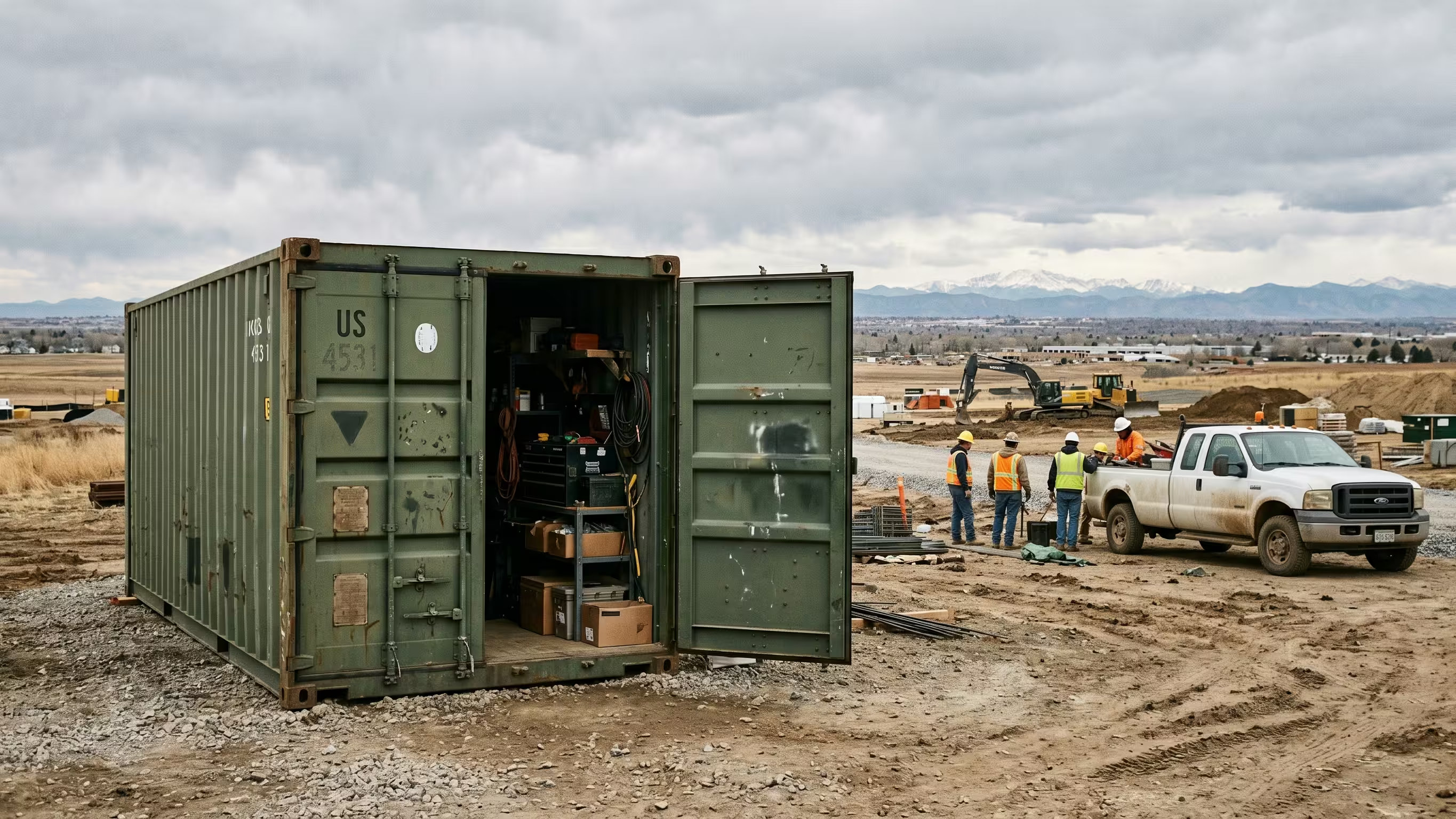
Construction superintendents, mine operators, and fabrication shops across Colorado need one thing from a storage box on site: it has to be there when they unlock it in the morning, no matter what the weather, the wildlife, or the night-shift opportunist did to it overnight. That’s the job CONEX was invented for, and that’s what we sell from the Aurora yard.
What CONEX really means
CONEX is shorthand for CONtainer EXpress - the original US Army logistics system from the Korean War that became the ancestor of the modern ISO shipping container. The Army needed boxes that could be dropped from a cargo plane, dragged behind a tractor, parked in a swamp, and still hold the contents intact. That design philosophy - overbuilt, modular, indifferent to abuse - is what people mean today when they call a container a “CONEX.”
The boxes we stock are not Korea-era surplus. They’re modern Corten-steel cargo containers in the toughest available grades: One-Trip for builders who want factory-new appearance, and Cargo Worthy for working sites where a few honest scars don’t matter. Both are stacking-rated, weld-ready, and built to a service life north of 25 years.
How a CONEX is built
Strip the paint off a CONEX-grade container and what you find:
- 14-gauge Corten weathering steel corrugated side walls, 1.6 mm thick, that form a self-passivating oxide layer instead of rusting through.
- A welded steel underframe with cross-members on roughly 12-inch centers, sitting on four ISO twist-lock corner castings rated for 192,000 lb of stacked load.
- A 1-1/8" marine-grade plywood or bamboo floor screwed to the cross-members and treated against pests per ISPM-15.
- Forklift pockets under the 20ft footprint for tine handling on rough ground.
- Cargo doors with four lock rods, neoprene gaskets, and stainless hinges.
The result is a box you can drop a Bobcat into, weld a man-door onto, stack three high in a row, and walk away from for a decade.
CONEX specs and grades
For industrial Front Range work we recommend two combinations:
| Configuration | Best for | Price (Aurora yard) |
|---|---|---|
| 20ft Standard, Cargo Worthy | General job-site lockup, fabrication shops, mine sites | $1,450 |
| 20ft Standard, One-Trip | Customer-facing sites, military, government, branded units | $2,800 |
| 40ft Standard, Cargo Worthy | Big-iron storage, lay-down yards, equipment storage | $2,100 |
| 40ft Standard, One-Trip | Modular office conversions, premium industrial | $3,800 |
Wind & Water Tight grades are available below those prices but we don’t usually recommend them for true CONEX-style use - once you start cutting, welding, and stacking, the older steel doesn’t return the same service life.
Front Range industrial use
The Aurora yard supplies CONEX boxes to projects up and down I-25 and out into the energy basins:
- General contractors - secure tool storage on multi-month builds in Denver, Boulder, Castle Rock. Stacked two-high to save laydown footprint.
- Mining and aggregates - replacement parts and blasting-supply storage at Front Range quarries and the Climax/Henderson moly operations.
- Oil & gas - Weld County pads and Wattenberg field sites that need secure chemical and tooling lockup. We deliver to leased pads weekly.
- DoD and federal - Buckley Space Force Base, Peterson, and adjacent government contractors who need One-Trip units for documented chain of custody.
- Fabrication and machine shops - bolt-on overflow storage that doesn’t require a building permit in most Adams and Arapahoe County jurisdictions.
Siting on rough ground
A CONEX doesn’t need a foundation, but it does need four corners that share a plane. On a typical Front Range site we recommend:
- Four pressure-treated 6×6 timber pads at the corner castings, leveled to within 1/2" across the diagonal.
- Or four 18×18×4" concrete blocks for permanent installations.
- A 6-inch crushed gravel base to keep the bottom dry through monsoon season and snowmelt.
- Doors facing leeward - Front Range gusts will rip an unlocked door off its hinges if it catches a winter storm.
We can advise on site prep at delivery and our drivers will refuse to drop a unit that won’t sit square.
CONEX FAQ
The questions below come up on almost every industrial sale. If your project is in a sensitive jurisdiction (HOA, historic district, mountain town zoning), let us know up front - we’ve seen most of it before.
Frequently Asked Questions
Is 'CONEX' the same as a shipping container? ▾
Will it survive a Colorado winter at 9,000 feet? ▾
Can I cut a man-door or roll-up into a CONEX without ruining it? ▾
What's the difference between a CONEX and a job-box trailer? ▾
Do you stock 10ft or 45ft CONEX units? ▾
What does a One-Trip CONEX look like vs. a 10-year-old one? ▾
Sizes that fit this use
Ready to lock in a CONEX Containers from Aurora?
Most quotes go out the same business day. Mon–Fri 8am–5pm MT.